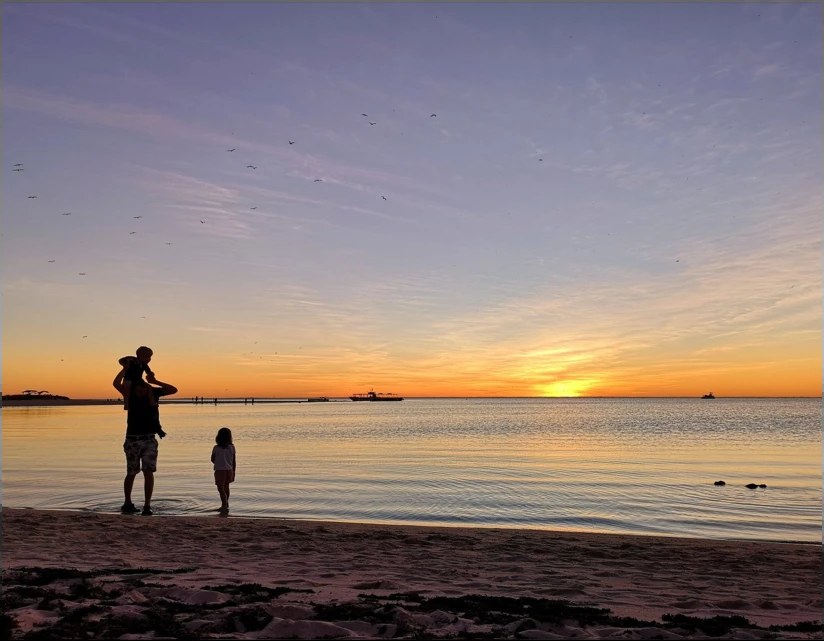
I want to create
a home for the mind.
Connect in a place where your mind can rest, then return to your own everyday life. KoKoRoBeing is an online mindfulness space for people who tend to try too hard, at work and in relationships, to come back to the present moment, even while still feeling unsettled.
- You can’t say no, and before you know it you’re carrying too much work
- Even at home, a comment from work keeps replaying in your head
- You’re supposed to be resting, but your body still feels tired
What is KoKoRoBeing?
The meaning behind the name
KoKoRo means “mind” in Japanese. Being means simply being who you are.
We often try to prove our worth by doing: working harder, doing things properly, being more useful. As we keep running, we slowly lose touch with how we actually feel.
KoKoRoBeing is a place to let go of “doing” for a while and return to simply “being.” It is fine to waver. It is fine to feel out of balance. We hope to be a place where you can accept those waves and come back to yourself, again and again.
Connecting in a home for the mind
You talk with others and feel relieved: “It wasn’t just me.” You breathe together, and each person’s breath seems to become one. I have seen moments like these many times.
It was mindfulness, and the friends I met through it, that helped me learn I could trust people.
KoKoRoBeing is a place where we connect, then each return to our own daily lives. Not to stay here forever, but to go back to our lives again.
Who this place is for
- People who tend to try too hard at work or in relationships
- People who have felt stifled by lines like “right or wrong” and “working hard or being lazy”
- People who want to feel like themselves again while caring for the connection between mind and body
What is mindfulness?
Mindfulness is often described as “paying attention in a particular way: on purpose, in the present moment, and non-judgmentally.” This description comes from Dr. Jon Kabat-Zinn, who brought mindfulness into medical settings in the United States.
Without noticing, our minds often run on “autopilot.” We replay conversations that are already over, or worry about things that haven’t happened yet. Our body is here, but our mind has gone off to the past or the future.
Mindfulness is the practice of noticing that autopilot and coming back to “here and now.” You don’t need special tools, a religion, or any experience. You can start with a single breath.
What research shows
A 2014 review of 47 studies (3,515 participants) found that mindfulness meditation programs had a small to moderate effect in easing anxiety, low mood and pain (moderate strength of evidence).
They were not found to be better than medication or other psychological therapies. At KoKoRoBeing, we share mindfulness not as a “treatment,” but as a “habit” that makes daily life a little easier.
Source: Goyal M, et al. Meditation Programs for Psychological Stress and Well-being. JAMA Internal Medicine. 2014;174(3):357-368.
How we practise at KoKoRoBeing
Programs
Start with a free trial session. Then, if it feels right, continue with individual sessions or the 3-month program.
Sessions are mainly held in Japanese. If you would like a session in English, please email us first at info@kokorobeing.com.
Free trial session
Tell us how you are and what is on your mind.
- We’d love to see you on camera, but camera off is fine too. Please put your own comfort first.
- During the session, you can talk using your microphone or type in the chat.
- You don’t have to talk about anything you’d rather not.
- It’s okay if you can’t put things into words.
- After the trial, you decide for yourself whether to continue.
- Please cancel or reschedule by 8 pm Japan time, two days before your session.
Individual session
Combining counselling, coaching and mindfulness, each session is shaped around the theme you bring at that time.
- Sort out what is on your mind
Together we look at the theme you want to work on now: work, relationships, emotional ups and downs, and so on. - Notice your body and feelings
We practise something that fits your theme, such as the breath or body sensations. - Find a small step to try in daily life
We look back on what you noticed and think together about what you can do in everyday life.
KoKoRoBeing 3-Month Program
The start date will be announced on our official LINE.
For people who try too hard at work or in relationships. With a short audio message every morning, group sessions twice a month and individual counselling once a month, you grow a place to come back to.
Learn more (Japanese page) →When I am back in Japan, I also welcome requests for in-person workshops. Please contact us.
Blog: “A Deep Breath in Words”
Small everyday waves, and what I noticed in them. Selected by theme. The articles are written in Japanese.
When you compare yourself with others
When you carry everything alone

Founder: Asami Sakura (咲空麻美)
A mindfulness instructor, counsellor and coach based in Australia. I have been living between Japan and Australia for 17 years. Since 2019, I have offered online sessions and courses, working with more than 750 participants in total. I am currently writing a book.
My starting point is my father, who struggled with alcohol dependence. As a child, I was told that I was the reason he drank. I began studying the mind because I wanted to understand why my kind father had become that way. Looking back, I think alcohol was his “home for the mind.” Everyone around him kept saying “stop.” So did I. But maybe what he was really waiting for was someone to say, “I understand why you want to drink.”
After university, I learned programming at a software company, and later worked in administration and accounting. I have had many jobs, including quality control, secretary, tax office, factory work, journalist, tour guide and nature photographer.
I worked hard and seriously in every job, but inside I kept drawing lines between “right and wrong” and “working hard and being lazy,” and I felt stifled. My wish to leave Japan grew stronger. After a year in Canada, I moved to Okinawa, and then to Australia. While living between two cultures, I encountered mindfulness, and little by little I regained the feeling of coming back to “now” as I am.
In Australia, I also accompanied junior and senior high school students on short study-abroad trips from Japan. Each time, there was a student who had not been able to go into their classroom in Japan. In a place where they were not judged and were given time until they were ready, their eyes slowly began to shine. At the end of two weeks, they said goodbye to their host families in tears. They taught me that people need a “home for the mind.”
From Masaki Yoshida, president of the Mindfulness Meditation Association in Japan, I learned that the parts of myself I had rejected are also me, and that every emotion deserves to be cared for.
At Maji-bun Academy, led by Yasumasa Maeda, a former copy editor at the Asahi Shimbun, I spent a year learning how to structure writing. That is where I learned what it feels like to entrust a formless mind to words.
Today, combining hypnotherapy, work with the subconscious, somatic (body-based) approaches and focusing, I run KoKoRoBeing as a place where people who try too hard can come back to themselves.
Voices from clients
Why not start
with a 20-minute talk?
You don’t have to carry it all alone. We begin by settling the breath together.
Frequently asked questions
What is mindfulness?
It is the practice of paying attention to your breath and body sensations “in this moment,” without judging them as good or bad. No special tools or experience are needed.
What happens in the free trial session?
For about 20 minutes, we listen to how you are and what is on your mind, and settle the breath together. We can also tell you about individual sessions and the 3-month program.
Can men join?
Yes. Anyone is welcome, regardless of gender or age.
Do I have to turn my camera on?
We’d love to see you on camera, but camera off is fine too. Please put your own comfort first.
I’m not comfortable speaking out loud.
You can talk using your microphone or type in the chat, whichever is easier for you.
Can I cancel or reschedule the free trial?
Yes. Please let us know by 8 pm Japan time, two days before your session.
Can I join from outside Japan?
Yes. Everything is held online (Zoom). The booking page shows times in your local time zone.
Can I attend in person?
Sessions are basically held online. When I am back in Japan, I also welcome requests for in-person workshops. Please contact us by email.
What language are the sessions in?
Sessions are mainly held in Japanese. If you would like a session in English, please email us first at info@kokorobeing.com.
Contact
If you have any questions about sessions or programs, please feel free to get in touch.
Official LINE “KoKoRoBeing” (Japanese)
News about sessions and programs is shared on LINE, in Japanese.
- “Am I Trying Too Hard?” type check
- Guided audio meditation
- Today’s omikuji (fortune slip)